How to Reduce Acne Redness Fast: Ice, Multani Mitti & What Actually Works
In this article
You wake up on the morning of a wedding, a job interview, or Eid, and there it is: one big, red, angry pimple right in the middle of your cheek. It’s not just the bump that bothers you. It’s the redness around it that makes it impossible to ignore.
If you’ve been searching for how to reduce acne redness, you’re not alone. In Pakistan’s heat, redness often looks even worse, because warmth and sweat make inflamed skin flush more easily. The good news is that there are quick ways to calm a red pimple within hours, and long term ways to stop redness and red marks from sticking around for weeks.
In this guide by K Beauty Vanity , we’ll cover both. We’ll also give you honest answers on popular home remedies like ice, multani mitti, and besan, so you know what’s worth trying and what could make things worse.
Why Do Pimples Turn Red?

A pimple starts when a pore gets clogged with oil and dead skin. Bacteria that normally live on your skin start to multiply inside that blocked pore, and your body treats it like a small infection.
To fight it, your immune system sends extra blood to the area, carrying white blood cells that attack the bacteria. That extra blood flow is what makes a pimple look red, swollen, and sometimes warm or painful to touch. In other words, redness is a sign of inflammation, and inflammation is your body trying to heal.
This is important to understand, because it tells you what actually works. Harsh products that “attack” the pimple often increase inflammation. Calming the skin is what brings the redness down.
Two Types of Acne Redness (Know Which One You Have)
Not all acne redness is the same, and treating the wrong type is one of the main reasons people don’t see results.
Redness From an Active Pimple
This is the redness around a pimple that’s still there. The spot is raised, swollen, and often sore. This kind of redness comes and goes with the breakout itself, and quick relief methods like ice and pimple patches work best here.
Red Marks Left After a Pimple Heals
Sometimes the pimple flattens and heals, but a pink, red, or purplish mark stays behind for weeks. This is called post inflammatory erythema, or PIE. It happens because tiny blood vessels near the surface stay widened after the inflammation is gone. It’s flat, it doesn’t hurt, and it isn’t a true scar.
The Press Test: Red Mark or Dark Spot?
Many people in Pakistan get both red marks and brown or dark marks after acne. There’s an easy way to tell them apart. Press a clean fingertip firmly on the mark for a few seconds, then lift it.
If the mark turns pale for a moment and then the colour comes back, it’s a red mark caused by blood vessels (PIE). If the colour stays exactly the same, it’s a dark spot caused by extra pigment, also known as post inflammatory hyperpigmentation. Red marks respond best to calming ingredients, while dark spots need brightening ingredients and a lot of sun protection.
How to Reduce Acne Redness Fast (Quick Relief)

If you need a pimple to look calmer in the next few hours, these steps will help the most.
Use Ice the Right Way
Ice is one of the quickest ways to bring down redness and swelling, because cold makes blood vessels tighten for a while. Wrap an ice cube in a thin, clean cloth and hold it on the pimple for about a minute, take a short break, and repeat a few times. Never rub ice directly on bare skin, as it can irritate or even damage it. We explain more about this in the ice section below.
Put On a Pimple Patch
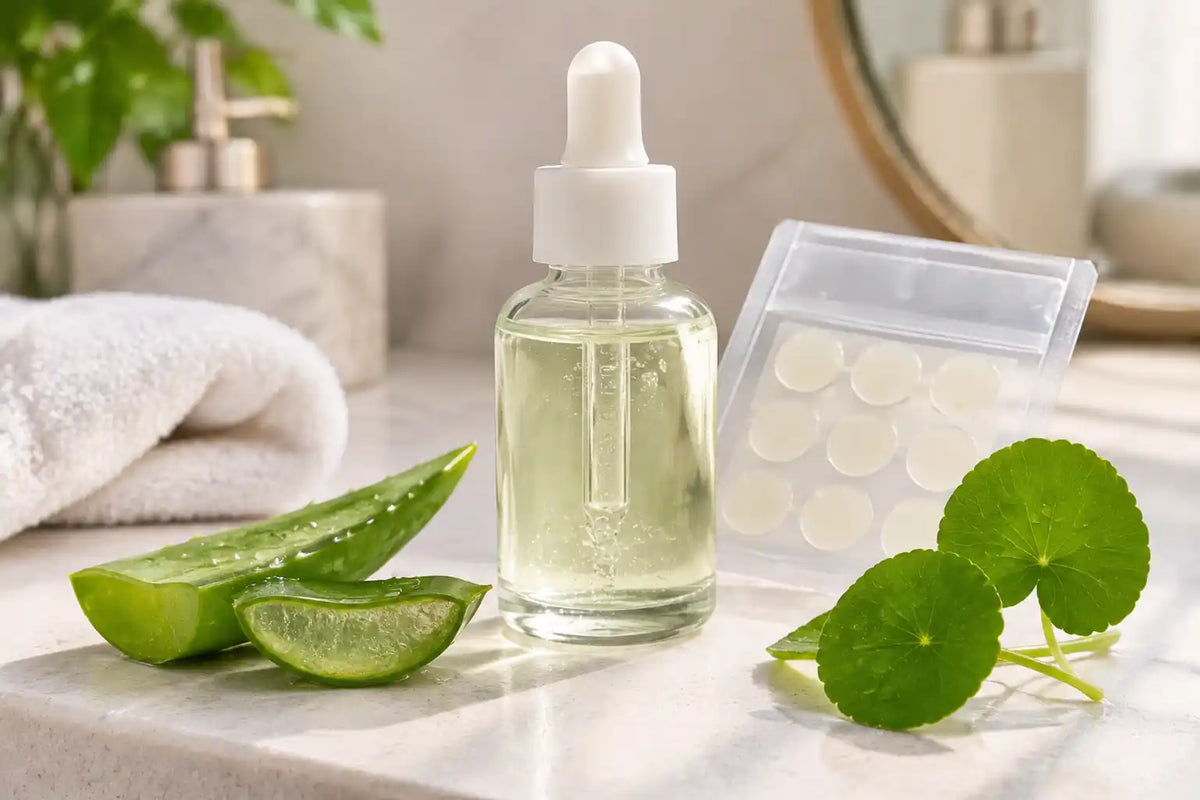
If your pimple has come to a head, a hydrocolloid pimple patch is one of the best things you can do. It absorbs fluid from the spot, flattens it, and protects it from dirt and from your own fingers. Most patches are thin enough to wear overnight, and many people notice the spot looks smaller and less angry by morning. The COSRX Acne Pimple Master Patch is a popular choice for exactly this.
Apply a Calming Serum
Soothing ingredients can take the edge off redness without irritating the skin further. Heartleaf (houttuynia cordata) and centella asiatica are two Korean skincare favourites known for calming inflamed, sensitive skin. A few drops of a soothing ampoule like the Anua Heartleaf 80 Soothing Ampoule or the SKIN1004 Centella Poremizing Fresh Ampoule, patted gently over the area after cleansing, can help your skin settle down. If you want to learn more about centella, read our guide on centella asiatica for sensitive and acne prone skin.
Stop Touching and Never Pop It
This is the hardest advice to follow, but it makes the biggest difference. Squeezing a pimple pushes bacteria deeper into the skin and damages the tiny blood vessels around it. The result is more redness, more swelling, a longer healing time, and a much higher chance of a red mark or scar afterwards. If you can’t stop yourself from touching it, cover it with a patch.
Cover It With a Colour Corrector or Concealer
If you need the redness to disappear right now, makeup is your friend. A green colour corrector cancels out redness, and a concealer that matches your skin tone covers whatever is left. Use a light hand, pat instead of rubbing, and choose non comedogenic products so you don’t clog pores further. You can browse options in our concealer collection.
How to Reduce Acne Redness Long Term

Quick fixes help on the day, but if you get red pimples or red marks often, you need a routine that calms inflammation over time.
Azelaic Acid
Azelaic acid is one of the most effective ingredients for acne redness. It helps reduce inflammation, fights acne causing bacteria, and helps fade both red marks and dark spots over time. It’s also gentle enough for most sensitive skin types, although some people feel a slight tingling in the first week. The Anua Azelaic Acid 10 Serum is a good option for anyone dealing with redness, blemishes, and post acne marks.
Niacinamide
Niacinamide, a form of vitamin B3, helps calm inflammation, control oil, and strengthen the skin barrier. A stronger barrier means your skin reacts less and heals faster. Formulas that combine niacinamide with tranexamic acid, like the Anua Niacinamide 10 TXA 4 Serum, are especially useful if you have a mix of red marks and dark spots.
You can use azelaic acid and niacinamide in the same routine. They work in different ways and are generally well tolerated together.
Gentle Cleansing, No Harsh Scrubs
Washing your face too often or scrubbing hard can make redness much worse. Use a gentle, low pH cleanser twice a day and lukewarm water. Avoid rough scrubs, walnut based exfoliators, and towels you rub hard against your face. If you exfoliate, use a mild chemical exfoliant a couple of times a week, not every day.
Sunscreen Every Day
Sun exposure keeps red marks red for longer and makes dark spots darker. In Pakistan, where the sun is strong almost all year, daily sunscreen is one of the most important steps if you want acne redness and marks to fade. Choose a lightweight, non greasy formula from our Korean sunscreen collection so it doesn’t feel heavy in humid weather.
For a full daily routine built around breakout prone skin, read our guide on the best Korean skincare routine for oily and acne prone skin in Pakistan.
Is Ice Good for Acne? The Honest Answer
Yes, ice can help, but only in a limited way. Cold temporarily narrows blood vessels, which reduces redness, swelling, and pain from an inflamed pimple. That’s why many people find that ice helps acne look calmer before an event.
What ice won’t do is treat the pimple itself. It doesn’t kill bacteria or unclog the pore, and the redness often returns once the skin warms up again. Think of it as first aid, not treatment.
To use it safely, always wrap the ice in a cloth or thin plastic bag, hold it on the spot for short intervals of about a minute, and stop if your skin feels numb or starts to sting. Don’t use ice on broken skin, open wounds, or right after a facial or chemical peel.
Home Remedies for Acne Redness: What Works and What Doesn’t

Pakistani homes are full of skincare nuskhe passed down through generations. Some can be helpful, some do nothing, and some can seriously irritate acne prone skin.
Is Multani Mitti Good for Acne?
Multani mitti, also known as fuller’s earth, is a natural clay that absorbs excess oil. For oily skin, a multani mitti mask can help the face feel less greasy and look a little more matte, which is why it’s so popular in summer.
However, it doesn’t treat inflammation directly, and it can be very drying. If your skin is dry, sensitive, or already irritated, it can actually make redness worse. If you want to use it, mix a small amount with rose water instead of lemon, apply a thin layer, and wash it off before it dries completely and starts cracking. Once or twice a week is enough.
How to Use Besan for Acne
Besan (gram flour) has been used as a gentle face cleanser in South Asia for a long time. It can help remove oil and leave the skin feeling fresh. To use it, mix a spoonful of besan with a little rose water or plain yoghurt to make a smooth paste, apply it gently, and rinse off after a few minutes without scrubbing.
Besan can be a mild part of your routine, but it won’t calm deep inflammation or fade red marks on its own. Avoid rubbing it hard on active pimples, and always do a patch test first, especially if you plan to add turmeric, which can stain and irritate some skin types.
Aloe Vera Gel
Pure aloe vera gel is soothing and lightly hydrating, and many people find it calms irritated skin. It’s one of the safer home options for redness. Use fresh gel from the plant or a product that’s close to 100% aloe, without added alcohol or strong fragrance.
Toothpaste, Lemon & Garlic: Never Use These
These three remedies are shared constantly on social media, but they can burn and irritate the skin, leaving you with more redness and sometimes dark marks that last for months. Toothpaste contains ingredients meant for teeth, not skin. Lemon juice is very acidic and makes skin more sensitive to the sun. Raw garlic can cause chemical burns when left on the skin.
|
Remedy |
Verdict |
Best For |
|
Ice (wrapped in cloth) |
Helps temporarily |
Swollen, inflamed pimples |
|
Multani mitti |
Okay occasionally |
Oily skin only |
|
Besan |
Mild, gentle cleanse |
Normal to oily skin |
|
Aloe vera gel |
Safe and soothing |
Most skin types |
|
Toothpaste |
Avoid |
Nobody |
|
Lemon juice |
Avoid |
Nobody |
|
Raw garlic |
Avoid |
Nobody |
Is Hydrafacial Good for Acne?
A Hydrafacial is a salon or clinic treatment that cleanses, exfoliates, and hydrates the skin using a special device. For oily skin, clogged pores, blackheads, and mild breakouts, many people find it leaves their skin cleaner and smoother.
It’s not a good idea, though, if you have painful, cystic, or very inflamed acne. The suction and exfoliation can irritate active breakouts and increase redness. It also doesn’t replace a proper daily routine. If you’re considering one, choose a qualified clinic and tell them about your acne before the treatment.
Things That Make Acne Redness Worse

Sometimes the reason redness won’t go away has nothing to do with the products you use. Watch out for these common triggers:
Heat. Pakistan’s summer heat, standing over a hot stove or tandoor, and very hot showers all increase blood flow to the face and make redness look worse. Wash your face with lukewarm water and cool down when you can.
Over exfoliating. Using scrubs, acids, and toner pads all at once damages the skin barrier and creates more inflammation.
Too many new products at once. If you add five new products in a week and your skin turns red, you won’t know which one caused it. Introduce one product at a time.
Steroid creams without a prescription. Many people in Pakistan apply creams like Betnovate on acne because they make redness fade quickly. These are steroid creams. Without a doctor’s advice, they can actually cause acne, thin the skin, and lead to stronger redness when you stop. Never use a steroid cream on your face unless a dermatologist has prescribed it.
Dirty pillowcases and phone screens. Both collect oil and bacteria that touch your face every day. Change your pillowcase often and wipe your phone regularly.
If your skin feels constantly red, tight, or stings with most products, your skin barrier might be damaged. Our guide on how to repair a damaged skin barrier can help.
When to See a Dermatologist
Home care works well for occasional pimples and mild redness, but some cases need professional help. See a dermatologist if:
-
Your acne is painful, deep, or cystic
-
Redness or red marks haven’t improved after two to three months of a consistent routine
-
Your face stays red even when you don’t have pimples, or you get flushing and visible blood vessels, which could be a sign of rosacea
-
Your acne is leaving scars or affecting your confidence
A dermatologist can recommend prescription treatments that aren’t available over the counter.
Final Word
Learning how to reduce acne redness is really about one thing: calming inflammation instead of attacking your skin. For fast relief, use wrapped ice, a pimple patch, a soothing serum, and keep your hands off. For long term results, build a gentle routine with azelaic acid, niacinamide, and daily sunscreen. And when it comes to home remedies, keep the gentle ones like aloe vera and occasional multani mitti, and leave toothpaste, lemon, and steroid creams out of your routine completely.
If you’re ready to calm your skin the right way, explore our collection of 100% original Korean acne products at K Beauty Vanity, with cash on delivery across Pakistan and free delivery on orders above Rs. 3,500.
Frequently asked questions
How long does acne redness last?
Redness from an active pimple usually calms down within a few days to a week as the spot heals. Red marks left behind after a pimple can take anywhere from a few weeks to a few months to fade. Calming ingredients and daily sunscreen help speed this up.
Can I reduce pimple redness overnight?
You can make a pimple look noticeably calmer overnight with a pimple patch, a soothing serum, and a few minutes of wrapped ice before bed. It’s unlikely to vanish completely, but it can look smaller and much less red by morning.
Does ice make acne worse?
Not when used properly. Problems happen when ice is applied directly to the skin for too long, which can irritate it. Always wrap ice in a cloth and use it for short intervals.
Can I use multani mitti every day?
It’s not a good idea. Daily use can dry out the skin and damage the barrier, which may lead to more redness and even more oil production. Once or twice a week is enough for oily skin.
Can I use azelaic acid and niacinamide together?
Yes. Both are gentle and work in different ways, so they can be used in the same routine. Apply the thinner serum first and give each layer a minute to absorb.
This article is for general guidance only and isn't medical advice. Always patch test new products, and see a dermatologist for ongoing skin concerns.