How to Use Vitamin C Serum: A Step by Step Guide for Pakistani Skin
In this article
Vitamin C is one of the most popular skincare ingredients in Pakistan, and for good reason. Between strong sunlight for most of the year, city pollution and post acne marks that refuse to fade, our skin needs an antioxidant that brightens and protects at the same time. But plenty of people buy a good vitamin C serum, use it for a month and see nothing. In most cases, the problem is not the product. It is how it is being used.
This guide covers everything: the exact steps, the right time of day, how to layer it, whether it helps with acne, and which Korean vitamin C serums are gentle enough for daily use.
What Does Vitamin C Serum Do for Your Skin?

Vitamin C is an antioxidant. In simple terms, it neutralises free radicals, the unstable molecules created by UV rays and pollution that damage skin cells, break down collagen and trigger dark spots.
Used consistently, a vitamin C serum helps to:
-
Brighten dull skin and bring back a natural glow
-
Fade dark spots and post acne marks over time
-
Even out skin tone, including patchy areas around the mouth and forehead
-
Support collagen, which keeps skin looking firm
-
Boost your sunscreen’s protection against daily UV damage
The catch is that vitamin C is a sensitive ingredient. It reacts to light, air, water and other actives. Apply it the wrong way and you lose a large part of its benefit before it ever reaches your skin.
How to Apply Vitamin C Serum Step by Step

The full routine takes less than five minutes. Follow these steps every morning.
Step 1: Cleanse Your Face
Start with a gentle cleanser to remove overnight oil, sweat and leftover product. A clean surface lets the serum absorb properly instead of mixing with grime. Use lukewarm water, as hot water can strip the skin and make it more reactive.
Step 2: Pat Your Skin Completely Dry
This step is skipped more than any other. Vitamin C absorbs best on dry skin. Water on the surface dilutes the serum and can make it sting. Press a clean, soft towel against your face rather than rubbing, then give it a few seconds to air dry.
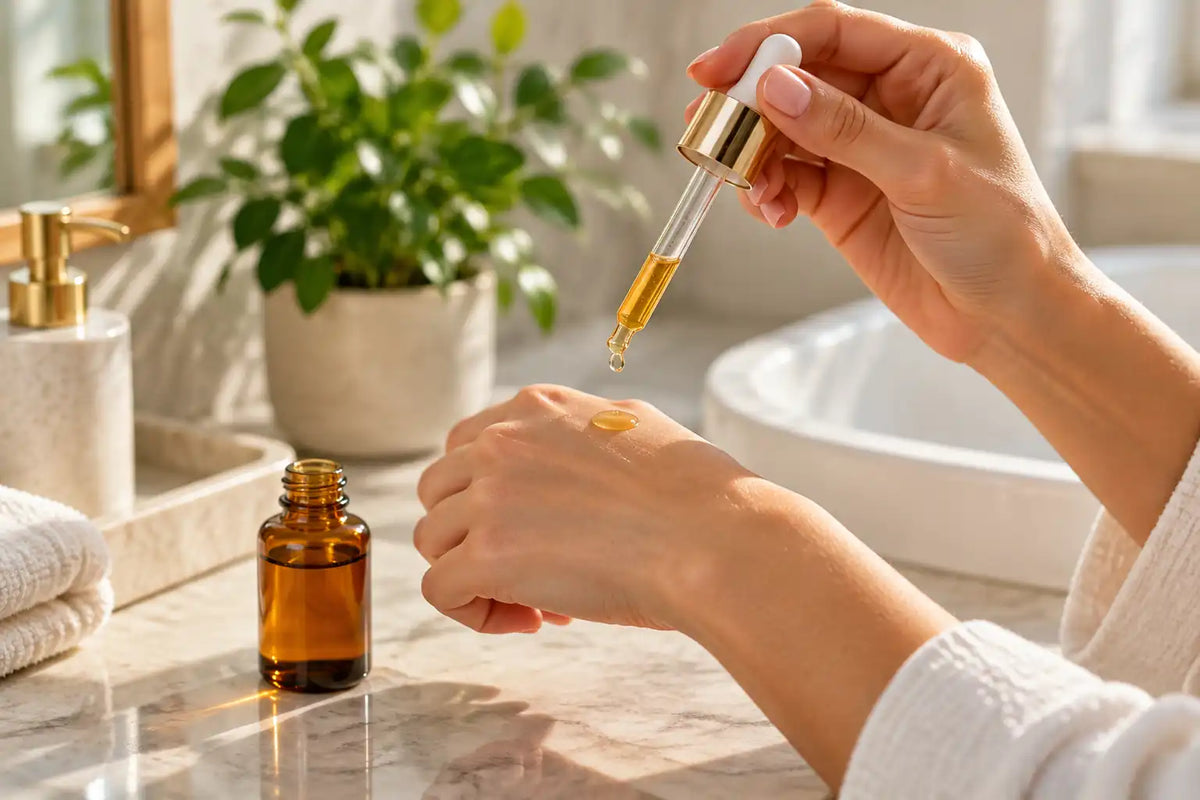
Step 3: Take 2 to 3 Drops
You do not need much. Two to three drops cover the entire face. Add one more if you want to cover your neck. Using more will not give faster results. The extra product simply sits on top of your skin and can feel sticky, especially in humid weather.
Step 4: Press, Don’t Rub
Place the drops on your fingertips and gently press the serum into your forehead, cheeks, nose and chin. Pressing reduces friction on the skin barrier and helps the serum spread evenly. Keep it away from the delicate skin right around your eyes.
Step 5: Wait About 60 Seconds
Give the serum a minute to absorb before applying anything else. If you rush straight to moisturizer, the two mix on the surface and the serum loses some of its strength. You will feel your skin go from slightly tacky to smooth when it is ready.
Step 6: Moisturize
A moisturizer locks in hydration and calms any dryness the serum might cause. Choose a lightweight gel cream in summer and something richer in winter.
Step 7: Finish with SPF 50
This is the most important step of all. Vitamin C fights UV damage, but it does not block UV rays. Sunscreen does. Together, they give your skin far better protection than either one alone. Apply a broad spectrum sunscreen as the last step of your morning routine. You can browse lightweight options in our Korean sunscreens collection.
When to Use Vitamin C Serum: Day or Night?

For most people, morning is the best time to use vitamin C serum. Its biggest strength is antioxidant protection, and that protection matters most when you are outside in the sun and pollution. Applied in the morning under sunscreen, it works as a second shield throughout the day.
How to Use Vitamin C Serum on Face at Night
Night use is still effective, especially for fading dark spots. Vitamin C continues to work on pigmentation while you sleep. Night application makes sense if:
-
Your skin feels sensitive or tingly when you use vitamin C during the day
-
You already use another active, like a niacinamide or exfoliating serum, in the morning
-
You want to focus mainly on dark spots rather than daytime protection
At night, the steps are the same: cleanse, dry, apply 2 to 3 drops, wait, then moisturize. Simply skip the sunscreen. The one rule is to avoid using vitamin C and retinol in the same night routine.
How Often Should You Use Vitamin C Serum? (Beginner Schedule)
If you are new to vitamin C or have sensitive skin, build up slowly. Before your first use, do a patch test on your inner arm or behind your ear and wait 24 hours to check for redness.
|
Week |
How Often |
|
Week 1 to 2 |
Every other morning |
|
Week 3 to 4 |
Daily, if there is no irritation |
|
After 1 month |
Every day, as part of your routine |
A mild tingle in the first few uses is normal. If you notice redness that lasts more than 30 minutes, go back to every other day until your skin adjusts.
How to Layer Vitamin C with Other Skincare

Mixing actives the wrong way is one of the most common causes of irritation. Here is a simple guide:
|
Ingredient |
Can You Use It with Vitamin C? |
|
Niacinamide |
Yes. Apply vitamin C first, let it absorb, then niacinamide. |
|
Hyaluronic Acid |
Yes. A great partner that adds hydration and reduces sting. |
|
Retinol / Retinal |
Use separately. Vitamin C in the morning, retinol at night. |
|
AHA / BHA Exfoliants |
Use on alternate days or keep exfoliants for night. |
|
Sunscreen |
Always after vitamin C, never before. |
You may have read that vitamin C and niacinamide cancel each other out. That idea comes from old research using unstable formulas, and modern products layer together without any issue. If dark spots and uneven tone are your main concern, pairing vitamin C in the morning with a serum like Anua Niacinamide 10 + TXA 4 Serum is a strong combination.
Is Vitamin C Serum Good for Acne?

Yes, but in a specific way. Vitamin C is excellent for acne marks, the dark or red spots left behind after a pimple heals. It works on the pigmentation that makes these marks linger for months, and it supports skin healing at the same time.
What vitamin C does not do is clear active breakouts on its own. It does not unclog pores or kill acne causing bacteria the way salicylic acid or azelaic acid does.
For acne prone skin, keep these points in mind:
-
Choose a gentle formula. Strong, high percentage serums can irritate inflamed skin.
-
Avoid heavy, oily serums that may clog pores.
-
Pair it with an acne treatment at a different time of day, such as a salicylic acid or azelaic acid serum at night.
-
Do not apply it on open or picked spots, as it may sting.
If breakouts are your main concern, you can explore targeted treatments in our acne products collection and use vitamin C to fade the marks they leave behind.
Using Vitamin C Serum by Skin Type
Oily Skin
Choose a water based, lightweight serum and stick to 2 drops. Follow with a gel moisturizer instead of a heavy cream. Morning use under a matte sunscreen works well.
Dry Skin
Apply a hydrating toner or hyaluronic acid serum first, then vitamin C. Follow with a richer moisturizer to stop any tightness or flaking.
Sensitive Skin
Start with a gentle vitamin C derivative rather than high strength pure vitamin C. Use it every other day for the first two weeks, and layer it over a calming hydrating step to reduce tingling.
Why Korean Vitamin C Serums Are Easier on Skin

Many Western vitamin C serums rely on high concentrations of pure L ascorbic acid. It is powerful, but it can sting, irritate and oxidise quickly, especially in hot climates.
Korean skincare takes a gentler route. Many Korean vitamin C serums use stable vitamin C derivatives and combine them with soothing, hydrating ingredients. The result is a serum that brightens steadily without the burning feeling, which makes daily use much easier to stick to. For most people, consistency matters more than strength, so a serum you can use every day will outperform a harsh one you keep skipping.
Here are a few Korean vitamin C picks available at K Beauty Vanity:
-
Anua Green Lemon Vita C Blemish Serum: A brightening serum focused on blemish marks and dullness, a good fit for anyone dealing with post acne spots.
-
Arencia Vitamin C Booster Shot: Designed for dark spots and glow, ideal if your main goal is brighter, more even skin.
-
Medicube Deep Vita C Pads: Toner pads infused with vitamin water and three types of vitamins. Use one after cleansing to prep the skin before your serum.
You can explore more options in our full Korean serums collection.
Using Vitamin C in Pakistan’s Weather
Our climate changes a lot between seasons, and your vitamin C routine should change with it.
In summer and humid months: Sweat and humidity slow down absorption. Pat your face dry with a tissue before applying, use fewer drops, and switch to a gel moisturizer. Reapply sunscreen every two to three hours if you are outdoors.
In winter: Dry air can make vitamin C feel tight or stingy. Add a hydrating layer before the serum and use a creamier moisturizer on top.
Storage matters too. Heat and light make vitamin C oxidise faster. Keep your serum in a cool, dark place, never on a sunny windowsill or in a hot bathroom, and close the cap tightly after every use.
Common Mistakes to Avoid
-
Using too much product. More drops do not mean faster results.
-
Applying it on wet skin. Water dilutes the serum and increases sting.
-
Rubbing instead of pressing. Friction stresses the skin barrier.
-
Skipping sunscreen. Without SPF, the sun keeps creating new dark spots while your serum tries to fade the old ones.
-
Using it with retinol in the same routine. Keep them apart, morning and night.
-
Using an oxidised serum. If your serum has turned dark orange or brown, it has lost its effect and should be replaced.
How Long Until You See Results?
Vitamin C works gradually. Here is what to expect with daily morning use and daily sunscreen:
|
Timeline |
What You Will Notice |
|
2 to 3 weeks |
Fresher, brighter looking skin and less dullness |
|
6 to 8 weeks |
More even skin tone and lighter recent acne marks |
|
8 to 12 weeks |
Visible fading of older dark spots and sun damage |
Consistency is the biggest factor. Skipping days or skipping sunscreen will slow your results down considerably.
Final Thoughts
Learning how to use vitamin C serum correctly is simple once you know the basics: apply it on clean, dry skin, use just 2 to 3 drops, give it a minute to absorb, and always follow with sunscreen in the morning. Choose a formula that suits your skin type, store it properly, and give it a few weeks to work.
Ready to start? Shop 100% original Korean vitamin C serums at K Beauty Vanity, with delivery in 2 to 3 days and cash on delivery available across Pakistan. Browse our serums collection.
Frequently asked questions
Do you apply vitamin C serum before or after moisturizer?
Before. Serums are lighter and more concentrated, so they go on clean, dry skin first. Moisturizer goes on top to lock everything in.
Can I use vitamin C serum every day?
Yes. Once your skin has adjusted, daily use gives the best results. Beginners should start every other day for the first two weeks.
Can I use vitamin C serum with niacinamide?
Yes. Modern formulas layer together safely. Apply vitamin C first, wait a minute, then apply niacinamide.
Can I use vitamin C serum at night?
Yes. It still helps fade dark spots overnight. Morning use is preferred because of its antioxidant protection, but night use is a good option for sensitive skin.
Why did my vitamin C serum turn orange?
It has oxidised after reacting with air, light or heat. An oxidised serum will not brighten your skin, so it is best to replace it.
Is vitamin C serum safe for sensitive skin?
Yes, if you choose a gentle formula and introduce it slowly. Korean vitamin C serums with stable derivatives are usually better tolerated than high strength pure vitamin C.
Can I apply makeup after vitamin C serum?
Yes. Let the serum absorb fully, apply moisturizer and sunscreen, then wait a minute before makeup to prevent pilling.
Do I still need sunscreen if I use vitamin C serum?
Absolutely. Vitamin C supports your skin’s defence against UV damage, but it cannot block UV rays. Sunscreen is essential every single morning.
This article is for general guidance only and isn't medical advice. Always patch test new products, and see a dermatologist for ongoing skin concerns.