How to Use a Face Mask: A Step by Step Guide for Every Mask Type
In this article
Face masks are one of the easiest ways to give your skin a visible boost, but they are also one of the most misused steps in skincare. A sheet mask left on until it dries out, a clay mask allowed to crack across the face, an exfoliating mask used every day because it felt good the first time. These habits can leave skin drier, more irritated or simply unchanged.
The good news is that using a face mask properly takes only a few minutes once you know the basics. The key detail most guides skip is that different masks need different handling. This guide covers the general method first, then breaks down how to use sheet, clay, overnight, peel off and wash off masks so you get the most from whichever one is in your cabinet.
Why Technique Matters

A face mask concentrates ingredients on the skin for a set period of time. That is what makes it effective, and it is also why timing and method matter so much.
Leave a sheet mask on too long and, once it starts to dry, it can draw moisture back out of your skin. Let a clay mask dry until it cracks and it may leave the skin tight and irritated rather than clear. Use an exfoliating mask too often and you risk weakening the skin barrier. None of these mistakes are dramatic on their own, but repeated over weeks they explain why many people feel their masks never deliver what the packaging promised.
How to Apply a Face Mask Step by Step
These steps apply to almost every type of mask. The sections that follow explain how to adjust them for each format.
Step 1: Cleanse Your Face
Masks work best on clean skin. If you are wearing makeup or sunscreen, use a cleansing oil or balm first and follow with a gentle water based cleanser. Pat your face dry with a soft towel.
Step 2: Prepare Your Skin
A hydrating toner is optional but helpful, particularly before sheet and overnight masks. Avoid using a scrub or exfoliating toner right before a clay or exfoliating mask, since layering two exfoliating steps can easily irritate the skin.
Step 3: Apply Evenly
Spread the mask in an even layer across the forehead, cheeks, nose and chin, and extend it down the neck if the formula allows. Keep it away from the eye area, the lips and the edges of the nostrils, where skin is thinner and more sensitive.
Step 4: Leave It On for the Right Amount of Time
This is where most mistakes happen. Follow the time on the pack rather than guessing. Leaving a mask on longer does not make it work better, and with many formats it actually reduces the benefit.
Step 5: Remove It Gently
Rinse with lukewarm water, lift away a sheet, or peel slowly depending on the type. Avoid scrubbing or pulling at the skin, especially around the cheeks and jaw.
Step 6: Follow With Serum and Moisturizer
A mask is not the end of your routine. Apply your usual serum and moisturizer afterwards to lock in the benefits. If you are unsure about the order of products, our guide on how to use face serum explains each step.
How to Use Each Type of Face Mask
Before going into detail, here is a quick reference for the most common mask types.
|
Mask Type |
How Long |
How Often |
Best Time |
How to Remove |
|
Sheet mask |
15 to 20 minutes |
2 to 3 times a week |
Morning or evening |
Lift off, pat in essence |
|
Clay or mud mask |
10 to 15 minutes |
1 to 2 times a week |
Evening |
Rinse with lukewarm water |
|
Overnight mask |
All night |
2 to 3 times a week |
Last step at night |
Rinse or remove in the morning |
|
Peel off mask |
Until fully dry |
Once a week |
Evening |
Peel slowly from the edges |
|
Wash off mask |
5 to 10 minutes |
1 to 2 times a week |
Evening |
Massage gently, then rinse |
Clay and Mud Masks

Clay and mud masks absorb excess oil and help clear congested pores, which makes them especially useful for oily and combination skin. Apply a thin, even layer and rinse it off while it is still slightly damp, usually after 10 to 15 minutes. Waiting until the mask is completely dry and cracking can leave skin tight and sensitised.
If blackheads around the nose and chin are your main concern, the Medicube Zero Pore Blackhead Mud Mask is designed specifically for congested areas. For a gentler option that cleanses without stripping, the Beauty of Joseon Red Bean Mask balances oil while keeping the skin comfortable.
Overnight and Sleeping Masks

Overnight masks are applied as the final step of your evening routine, after serum and moisturizer, and left on while you sleep. They work by sealing hydration into the skin for several hours, which makes them ideal for dry or dull skin and for colder months.
The Medicube Collagen Night Wrapping Mask is a popular choice in this category. It forms a light film on the skin overnight that is removed in the morning, so follow the directions on the pack for best results. Give the mask a few minutes to settle before lying down, and use a clean pillowcase to keep the product on your skin rather than on the fabric.
Peel Off Masks

Peel off masks dry into a flexible film that lifts away surface buildup and leaves skin looking smoother. Apply a slightly thicker layer than you would with a clay mask, since thin patches are harder to peel. Keep it well away from eyebrows and the hairline.
Once the mask is completely dry, start peeling from the outer edges and work slowly upwards. Peeling too quickly can irritate the skin. The KLAVUU Actress Backstage Peel Off Glow Mask is a good example of this format, used once a week for a smoother, brighter finish. Avoid peel off masks on active breakouts or broken skin.
Wash Off Masks
Wash off masks often contain fine exfoliating particles or brightening ingredients. Apply them to clean, damp skin, leave them for a few minutes, then massage gently in small circles as you rinse.
The SKINFOOD Rice Mask works well for dull, uneven skin, while the SKINFOOD Black Sugar Mask offers a gentle scrub that smooths rough texture. Because both exfoliate, once or twice a week is plenty.
How to Use a Sheet Mask

Sheet masks are the most popular format in Korean skincare and also the one people most often use incorrectly.
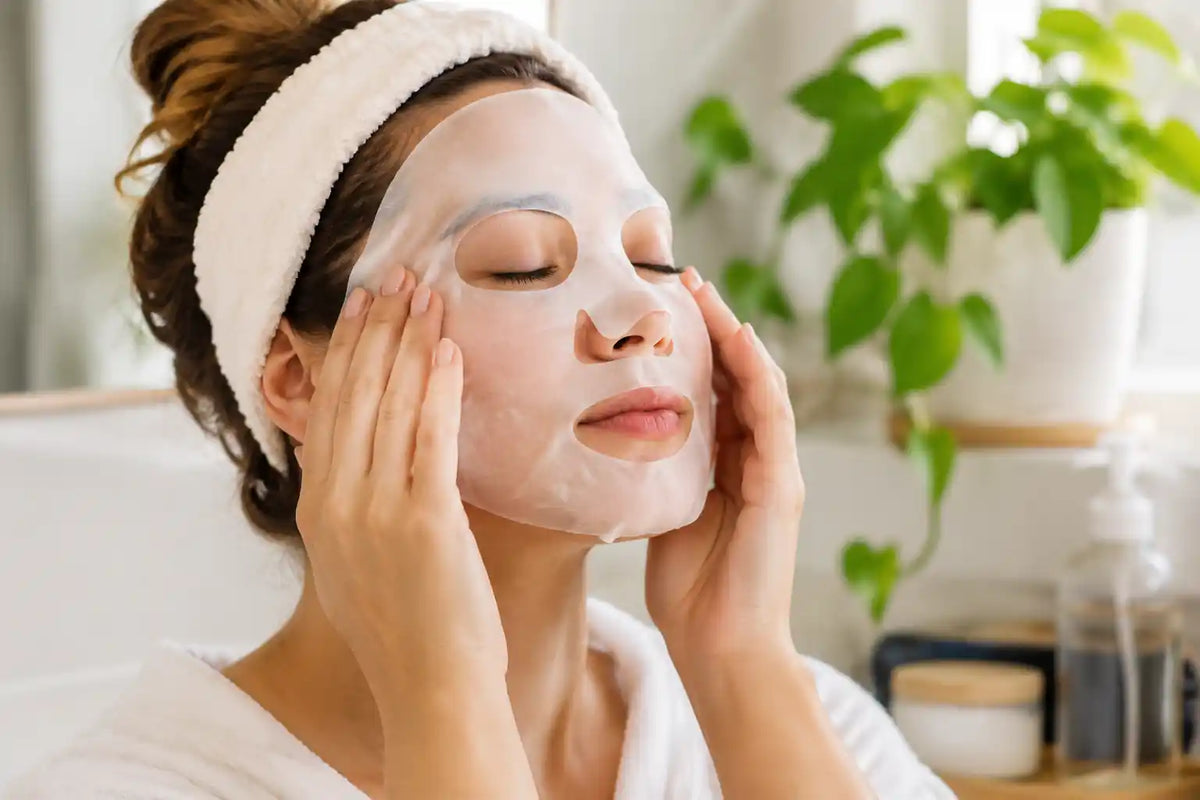
Before opening the pack, press and massage it gently between your fingers so the essence spreads evenly through the sheet. Unfold the mask and line up the eye holes first, then smooth it outwards over the cheeks, nose and chin. Press out any air bubbles so the sheet sits flat against the skin.
Leave it on for 15 to 20 minutes. This timing matters more than most people realise. As the sheet begins to dry, it can start pulling moisture back out of your skin, which defeats the purpose of using it. Remove the mask while it still feels damp.
There is usually a fair amount of essence left in the pack. Rather than throwing it away, pat it onto your neck, the backs of your hands or any dry patches.
For barrier support and hydration, the Missha Mascure Moisture Barrier Ceramide Sheet Mask is a reliable everyday option, while the MEDI PEEL Derma Maison Toning Active Facial Mask focuses on a brighter, more even look. If you are comparing options and prices, our guide to Korean sheet mask prices in Pakistan breaks down what you are actually paying for.
Should You Wash Your Face After a Sheet Mask?
In most cases, no. The essence left on your skin contains the hydrating and active ingredients you are using the mask for. Gently pat it in until it absorbs, then follow with moisturizer.
The exception is if your skin feels uncomfortably sticky after 10 minutes, or if you have very sensitive or acne prone skin and notice that heavy residue causes breakouts. In that case, a quick rinse with lukewarm water is perfectly fine.
When to Use a Face Mask: Morning or Night?
The best time depends on the mask.
Hydrating sheet masks work well in the morning, especially before makeup, since they leave the skin plump and smooth. Clay, exfoliating and peel off masks are better in the evening. They can leave skin slightly more sensitive for a few hours, and nighttime gives it a chance to settle before sun exposure. Overnight masks, as the name suggests, belong only in your evening routine.
If you have one free window in the week, evening is the more flexible choice for almost any mask.
What to Apply After a Face Mask
What comes next depends on the mask you used.
After a clay, mud or exfoliating mask, the skin can feel slightly dry, so follow with a hydrating toner and a moisturizer to restore balance. After a sheet mask, pat in the remaining essence and go straight to moisturizer. After an overnight mask, simply cleanse in the morning and continue with your usual routine.
If you mask in the morning, always finish with sunscreen. Freshly exfoliated skin is more sensitive to UV, and a lightweight SPF from our sunscreens collection protects the results.
Multi Masking: Using Two Masks at Once

Multi masking is a Korean technique that makes a lot of sense for combination skin. Instead of choosing one mask for your whole face, you apply different masks to different areas at the same time.
A common approach is a clay or mud mask on the oily T zone across the forehead, nose and chin, with a hydrating or overnight style mask on the drier cheeks. Remove each one according to its own timing. It takes a little more effort, but it treats each part of your face according to what it actually needs.
Using Face Masks in Pakistan’s Weather
Our climate changes how often and which masks are worth reaching for.
During hot, humid summers, oil and sweat build up quickly, so a weekly clay mask helps keep pores clear. Storing sheet masks in the fridge for an hour before use adds a cooling effect that feels especially good after a long day in the heat. In winter, particularly in drier cities, overnight and hydrating sheet masks become far more useful, while clay masks can be reduced to once a week or less. If you live in a city with high pollution, a gentle cleansing mask once a week helps remove the buildup that daily cleansing can miss.
Common Face Mask Mistakes
Leaving a sheet mask on too long. Remove it after 15 to 20 minutes, while it is still damp.
Letting clay masks crack. Rinse before the mask is completely dry.
Using exfoliating masks too often. Once or twice a week is enough for most skin types.
Applying masks with unwashed hands. Clean hands help avoid transferring bacteria to freshly cleansed skin.
Using peel off masks on active breakouts. Peeling over inflamed spots can make them worse.
Skipping moisturizer afterwards. Even oily skin benefits from sealing in hydration after a mask.
Final Thoughts
Using a face mask properly comes down to a few simple habits: start with clean skin, follow the timing on the pack, remove the mask gently, and always finish with moisturizer. Beyond that, match the method to the mask. Sheet masks come off while still damp, clay masks before they crack, and overnight masks stay on until morning.
Choose one or two masks that suit your skin and use them consistently rather than trying something new every week. You can explore sheet, clay, overnight and peel off options in our Korean face mask collection, all sourced directly from Korea and delivered across Pakistan.
Frequently asked questions
How long should I leave a face mask on?
Most masks work best for 10 to 20 minutes. Sheet masks need around 15 to 20 minutes, clay masks 10 to 15, and wash off masks 5 to 10. Overnight masks stay on while you sleep. Always check the pack for specific directions.
Should I wash my face after a sheet mask?
Usually not. Pat the leftover essence into your skin and follow with moisturizer. Rinse only if your skin feels too sticky or you are prone to breakouts from heavy residue.
Can I use a face mask every day?
Gentle hydrating sheet masks can be used daily if your skin enjoys them. Clay, exfoliating and peel off masks should be limited to once or twice a week.
Is it better to use a face mask in the morning or at night?
Hydrating sheet masks suit the morning, while clay, exfoliating, peel off and overnight masks are better in the evening.
What should I apply after a face mask?
Follow with serum and moisturizer. If it is daytime, finish with sunscreen.
Can I use two face masks together?
Yes. Multi masking, such as a clay mask on the T zone and a hydrating mask on the cheeks, works well for combination skin.
Can I reuse a sheet mask?
No. Once a sheet mask has been exposed to air and skin, it is no longer hygienic to reuse. Use any leftover essence in the pack instead.
Should I apply a face mask on wet or dry skin?
Most masks go on clean, towel dried skin. Wash off masks are often easier to spread on slightly damp skin, while clay masks work best on dry skin. Follow the instructions for your specific product.
This article is for general guidance only and isn't medical advice. Always patch test new products, and see a dermatologist for ongoing skin concerns.